Saturday, 7 October 2017
Becoming sculpture
Beauty, heritage and decay - three words I keep returning to when I'm thinking about my photography practice. I haven't found better ones to define what appeals to me.
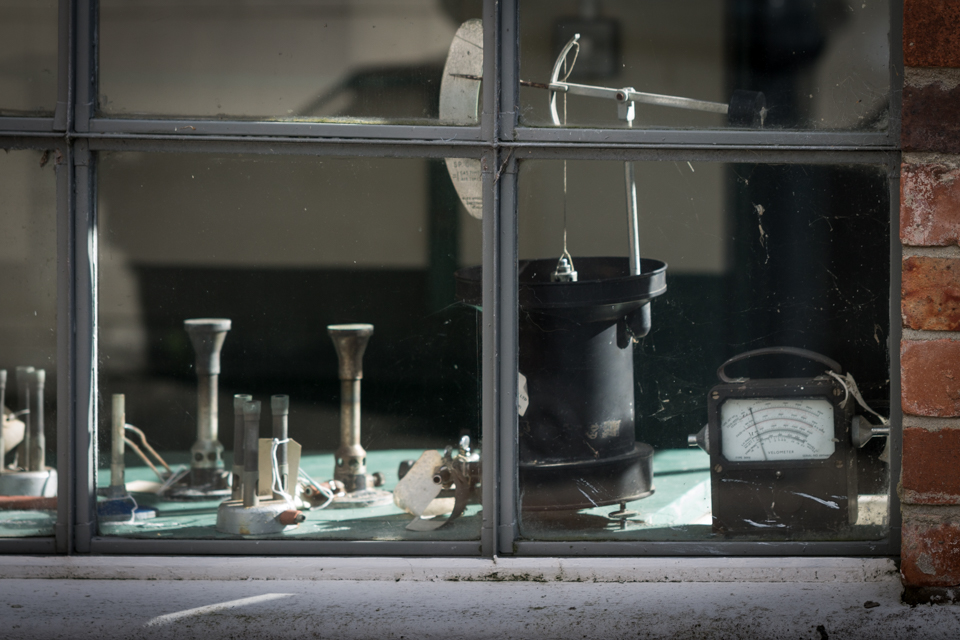
I've been to some places which represent this combination of qualities perfectly. Old Car City in White, Georgia, is one. This is another. It's the old gasworks at Carrickfergus, now a museum and visitors' centre.
I was there a few weeks ago. The guided tour was very interesting, but I fear I wasn't a terribly good visitor, always lagging behind everyone else, taking photographs while the rest of the group was already at the next station listening to the guide. Sorry about that.
It doesn't take much for an industrial installation to become sculpture. And it doesn't take long for disused industry to become a secret gallery of old masters. Such a privilege to round a corner and see such beauty.
Sunday, 1 October 2017
Following Frances 4: Swanlinbar, Part 1
I
It’s the day after
the autumn equinox, mild, pretty and a little bit melancholy. I’ve left the
main routes from Belfast as soon as possible and approach Swanlinbar from a new
angle, all poignant abandoned cottages and narrow grassy roads. The Creamery
Road brings me into the heart of the town. I turn right and there, almost
immediately, is the abandoned Methodist chapel where William started working in
the summer of 1900.
I drive up and down
the town to see what’s happening. It doesn’t take long, and the answer is very
little. Swanlinbar is attractive and nicely situated on the river, but it’s the
quietest of all the towns I’ve visited so far. It’s midday on a September
Saturday, and there’s no-one about.
I know from my
research that this is a fairly recent slowing into slumber. In the early
eighteenth century, there was an iron foundry here – the Irish place name is An
Muileann Iarainn, The Iron Mill, and the name Swanlinbar was a fabrication, a
jigsaw of syllables from the names of the foundry’s owners. Later, there was a
hotel in town for visitors to the six mineral spas which flowed nearby. John
Wesley himself visited in 1767, 1775 and 1778 (and found the people of all
denominations “artless, earnest and loving”). And even in recent years, the town
was thriving, with a lively eleven-pub high street. Now there’s only one.
I don’t have high
hopes for what I’ll find here, although it’s fantastic to be able to see the
church, still standing plain and proud near the river. But I want to walk
around a little, so I park at the end of the Creamery Road and go across to the
Post Office, which adjoins the church.
II
And everything
changes. Behind the counter I find Gregory. He is now the owner of the old
Methodist church. He’s a keen and most knowledgeable local historian. He loves
Swanlinbar and is involved in all sorts of plans for its regeneration. He’s
also very kind and friendly, and within minutes I’m being shown up and down the
street and regaled with tales of old Swanlinbar and prominent Methodists from
days gone by.
He recalls Christmas
Days in his own childhood, going to Mass with his siblings, full of excitement to see what Santy
would have brought them, and noticing the Methodist service already in full
swing. They were just that little bit holier than the Catholics…..
He asks if I’d like
to see inside the old church.
There’s nothing I’d
like more.
Most of it is empty
space. Bare boards, no pews or furniture. Peeling duck-egg blue wooden walls. A
high ceiling, exposing the roof. Gothic windows, offering a view only of the
sky. There’s no smell of damp. It’s been well preserved.
There’s a tiny
minister’s room, board-panelled, near the main door. Some old coat-hooks on the
wall. And an amazing treasure – an old harmonium tucked into the corner.
I’m not sure about
the chronology of instrument use in Methodist services. But this is an old
instrument, one which Frances could have played. Its keys are swollen stuck,
but the pedals move. It’s still breathing.
I stand a while,
taking in the atmosphere, looking around and imagining the little sanctuary
freshly painted and bustling, full of people in their dark Cavan Sunday best.
My great-grandmother at the organ, turning the pages of her hymnbook for the
next stirring setting of a Charles Wesley text. My great-grandfather addressing
the first congregation that was really just his, inspiring them, making a joke
about being a Monaghan man himself, noticing the absentees, encouraging the
flock.
III
Gregory shows me
the church basement. You can see how sturdy the construction is, standing
beneath the floorboards I’ve just been walking on. Strangely, there’s a
fireplace built into the wall down here. Did somebody live here at some point?
There are mysteries still to be unravelled.
I’ve been thrilled
by this visceral glimpse into Frances and William’s life in Swanlinbar, and I’m
ready to drive away happy. But Gregory wonders if I’ve called at the manse yet.
No – I had assumed that the manse lay between the church and the river, and
that it’s long demolished.
It’s not. It’s a
few houses up the Creamery Road from where I parked my car. Gregory suggests
that I call at the door.
To be continued......
Sunday, 24 September 2017
Judgement day
Passing judgement on artistic work.
It's something I have to do frequently in my work as a music teacher. And, over the last few years, it's something where I've frequently been on the receiving end in my photographic and audio-visual work.
I hate doing it, myself. It's not a problem marking essays or aural perception exercises or even students' performances, but when it comes to their compositions, their own creative musical constructions, I flinch from awarding a mark.
It's because I know that, when students have completed their task whole-heartedly, it's very personal. There's a part of them in the music I'm hearing. They're left exposed, hopeful, vulnerable. I don't want to put a number on that, or even to place them in order of merit.
I'd love just to applaud and congratulate.
But, as a teacher, part of my job is to encourage them to develop their creative work. And part of that involves giving feedback on their work. Some of that feedback has to identify the ways in which they can aim to improve.
So that's what I try to do. I start with praise - and there are always, always things to praise. I try to be specific, using technical terminology to show that the work is worthy of being discussed in a serious way. Then I carefully choose something which, in my opinion and experience, the student could realistically take to a higher and more effective level. I try to present that in a way that sounds professional and matter-of-fact, totally believing that the work shows promise and that this area for development is very much achievable. And I conclude with something positive, hoping that I'm leaving the student motivated, first of all to compose again, and also to focus a little on the area that I suggested for development.
I don't always get it right, and I'm sure my students sometimes feel discouraged, and I'm sorry about that. But I recognise very genuinely that it's a privilege for me to have this creative work shared with me, and that that privilege brings serious responsibilities.
Having my own work judged makes me feel jittery and sick. I look at my little photographic print or watch my film, exposed in front of an audience on an easel or a screen, and actually tremble. I'm often all too well aware of its flaws and weaknesses myself. Usually, I'd love at the point of judgement just to snatch it away and run out the door. But, because I genuinely want to improve my skills, I wait, trying not to hyperventilate audibly, to hear what the judge has to say.
Sometimes, that process ends up being exceptionally rewarding. My few moments with my work in the spotlight leave me feeling validated, encouraged, eager to create something else, and possessed of useful new knowledge about how I can take my work further, or stimulated with new ideas that I wouldn't have thought of myself.
But sometimes, that's not the case. Sometimes I've felt humiliated, or dismissed, or totally misunderstood, or perhaps not even worthy of comment. Because my work, up there on display and subject to judgement, is a part of me.
The most positive experiences of having my work judged haven't all been the same. Nor have they necessarily been the ones where my work achieved its highest successes. But the judges in question have tended to:
Make it clear that there's nowhere else they'd rather be than enjoying our creative work.
Show a genuine emotional engagement with what they see.
Speak in a lively, enthusiastic, eager way.
Start with the positives. There are always positives. And that means in the work itself, not its peripherals or its presentation.
Take the work seriously, putting it in its broader context, noting the techniques used.
Treat it as art.
Avoid second-guessing what it is or where it was made, if they don't know for sure.
Choose something that can be improved.
Avoid focusing on why that thing is bad; instead give positive, constructive, practical advice on how it can become better.
Avoid finding the same flaw in lots of work - if that's happening, it's probably just a bee in their bonnet.
Avoid too many personal anecdotes - it's our work up there, and it's us waiting on tenterhooks.
Avoid low blows that make the audience laugh at the expense of someone's work.
Finish on a positive note, so that the engagement with each piece ends on an upwards trajectory.
*****
Having put those thoughts on (virtual) paper, I'm heading out into my own working week with them clearly in mind. I'll be judging creative work every day. I hope I can follow my own advice.
Saturday, 16 September 2017
Love is enough
Last weekend, the European Heritage Open Days saw me touring the back roads of East Antrim in the Micra. My first objective was Pogue's Entry in Antrim itself. The tiny cottage preserved here was the home of the barefoot child Alex who grew up to be Dr Alexander Irvine, student at Oxford and Yale, marine, minister, missionary and author.
He's most famous here for his novel, "My Lady of the Chimney Corner". Disgracefully, I hadn't read it. I was able to remedy my lack in this online reader - a nice facsimile of an early edition.
The parallels between his family and my own (and so many ordinary families from the North of this era) are enough to make it fascinating. Famine, true love, poverty, faith and education are recurring themes. He presents the dialogue in what feels now a rather patronising attempt at a literal reproduction of an Antrim accent - but it's still a touching story. It has a sense of authenticity, resonant descriptions of ordinary things and the sort of phrases that lodge in the truthful parts of your mind.
The soda bread was fantastic too.
"We live at the bottom of the world where every hope has a headstone."
"How cud a machine make a boot, Anna?"
"There were few whole pieces on the dresser."
"Love is enough, Jamie."
Sunday, 10 September 2017
Following Frances 3: Ballybay
I
It’s
mid-August when I visit Ballybay – just as it was when Frances and William
arrived there after their wedding. The sun is bright and the clouds are fluffy,
but it’s Sunday quiet and I walk up and down the main street without meeting
many other people.
I
hadn’t realised before just how nicely preserved Ballybay is. If you look higher
than car level and picture the power lines out of the way, it can’t have been
very different in 1899. Most of the prettily painted houses look as if they
would have been well established by then. Many of the shop fronts are still un-modernised.
The charming twists and turns and rises and falls of the road lend a
fantastical mood – it’s like an imaginary Irish town from a fairy-tale.
Every
now and then, the terraces of shops and houses are broken up with an archway.
Many of these provide tantalising views of old outhouses and sheds set in
behind, preserved by benign neglect as they were a hundred and twenty years
ago. There’s no doubt that Frances’s late Victorian skirts swept up some of
those steps.
One
of my favourite streets is a steep incline up to the Anglican church. Its
grounds offer fine views across the town and to Loch Mor, below. I spend a
while walking through the old gravestones. I pick some early blackberries, and
then suffer a crisis of conscience, because stealing food from a churchyard
suddenly seems a bit wrong.
The
blackberries are in evidence everywhere, though. It’s a reminder of how much
further south we are here, and what a sheltered inland area it is. At home, the
berries are still green. Here, some of the branch ends are heavy with sweet,
ripe, black ones. They’re my favourite fruit. I justify myself to my conscience
and eat away.
Going
back down Church Street, I pause outside one very derelict house. Flakes of
duck-egg paint drift onto the road. Ivy covers some of the windows completely.
The roof is open to the blue sky. It’s atmospheric and lovely. I stand for a
while and take in its details.
II
I
don’t know exactly where in Ballybay Frances and William lived. Nora’s memoir
explains that there was no manse in town for the Junior Married Minister, so
they rented a little house for £15 a year from William’s £60 salary, which also
had to cover the expense of keeping a pony. Mr Ralph Richardson, a horse trader
famous throughout Ireland, lived in town and attended the Methodist church. His
generosity to successive Methodist junior ministers is well documented: William’s
steed may well have been more valuable than he realised.
And
all trace of the church, unusually, is gone. It was sold in 1991, for £7000, to
Dr M Smyth, but my online detective skills haven’t been good enough to discover
where it was or what happened to it. I think I’ll need to join the Irish
Methodist Historical Society to find out this sort of secret. I think Frances
would approve.
I
concentrate my speculation on Meeting House Lane – just the sort of street name
which could arise from the presence of a Methodist church, although it’s also
the route to the Presbyterian Meeting House on the Clones Road. It’s a nice
back street, with an old bridge crossing the peaceful little river. I sit on
the bridge in the sun for a while, pick some more blackberries, and find a
pleasingly sparkly white granite stone to take home.
III
Ballybay
was part of a paired circuit with nearby Cootehill, where the senior minister
lived. I drive along the ten-mile road linking the two towns, through hills and
wetlands, a pleasant summer landscape. There are several abandoned houses on
the road which might date back to Frances’s time. I think of William travelling
around on his horse, visiting members of the small church, receiving
congratulations on his marriage and gifts of food to take home to his new wife.
With
perfect timing, I turn a corner to find three white horses munching stolidly in
a scrubby field. They observe me somewhat balefully.
My
own bed and breakfast accommodation is off this road, in the townland of
Lisnalong. It’s a gorgeous location with a super-soft bed where, later, I’ll
dream of boats on the lake and wake to find songthrushes circling outside my
window.
My
hostess, Annie, has me eating tea and cakes in the living room and listening to
some good advice on life in general, before she sends me back to Kieran’s
restaurant in Ballybay for my dinner. It’s the only place in town to go. I’m
obedient, and head straight back to Kieran’s purple door. Unfortunately, however,
it is actually the only place in town to go, and all the tables have just
filled up.
But
Ballybay hospitality wins the day, and the chivalrous Harry invites me to join
him at his table. Harry is of indeterminate age and reveals very little about himself
at first. I wonder how to ask politely what he does, without causing offence by
assuming he’s retired, or not retired – always a minefield. “What are you
involved in yourself?” is my best effort – indeed, I’m quite pleased with this
as an enquiry in the best of taste. He’s involved in the waste business, and we
conduct an entertaining conversation about this field. You would be surprised,
as I was, to hear some of the things that are stumbled upon by people in the
waste business.
Harry
has lived here all his life and knows who it is in town who will know the
things I want to know. I take down some contact details and thank him kindly.
He leaves me to my rhubarb crumble and waves a blessing as he goes out the
door.
IV
I’ve
been very taken with Ballybay, but in Cootehill I feel that I’ll be on slightly
surer factual ground.
I
walk the length of the broad, practical main street, noticing again how well
preserved many of the older buildings are. I’m looking out for the Methodist
church and manse on Bridge Street, at the far end of town.
This
church was also sold after the congregation became too small to maintain it,
but the Freemasons who bought it have kept it intact, and I recognise it
immediately. The double-fronted white manse is set slightly behind it, sharing
its lovely garden. And – oh no! – the manse is now a bed and breakfast
establishment! If I had known this, staying here could have been the highlight
of my trip.
As
it happens, the owners, Michael and Mary, are working in their garden, making
the most of the sunshine. I introduce myself, hoping that I might perhaps take
a photograph of the outside of the old manse. But within a minute I’ve been
invited inside for tea (I think Mary was getting tired of cutting the hedge and
is looking for an excuse to take a little break…) and am shown all around the
house. I’m so grateful. The house is full of original details – shutters, door
handles, windows, fireplaces – and it’s easy to picture how it would have been
in 1899.
The
minister then, William’s senior, was Henry N Kevin. The Reverend Kevin was 48
at this point, an experienced clergyman who had already worked all around
Ireland. His wife, Annie, was a little younger, at 40, and their children were
ten-year-old Charlie and six-year-old Helen. I picture them as a lively,
cultured family, Henry with his rakish middle initial, Annie, originally from
England and a keen singer, the two children with their surprisingly modern
names.
Frances,
missing her own large and gregarious family, would have been welcomed
thankfully into their midst. An experienced auntie to her siblings’ many
children, she played with the little Kevins as the men discussed their
congregations. She was a good pianist – perhaps she accompanied as Annie sang,
or maybe they joined in a duet. Annie, not so steeped in the ways of Irish
Methodism as the others, might have been slightly less reverent on occasion,
making Frances laugh as she told anecdotes about her time as a minister’s wife.
They would eat modestly but well, Frances enjoying the respite from her own
cooking chores, but always, as a well brought up Fermanagh girl, offering Annie
her help.
V
The
year, full of new experiences, friendships and hopes, went quickly. June saw
Frances on tenterhooks, waiting to see which church Conference would assign
them to. William, thinking himself a veteran of this process by now, was more
sanguine. And rightly so, this time, for the decision came that William was to
go to Swanlinbar, scene of his first placement as a Junior Minister. Now he
would be the Minister. They would live in their own manse, their first real
home.
I
follow what are now the back roads to Swanlinbar. It’s about forty-five miles
of lush, Monaghan and Cavan lakeland. A couple of showers disrupt the sunshine.
Along the way, I pass the forbidding façade of the workhouse at Bawnboy,
wondering how much of a shadow this haunting place still cast in 1900.
But
Swanlinbar is an attractive small town on a fine August day. I feel buoyed up,
ready for the next stage of the journey, what must have seemed the real
beginning of their working lives.
VI: Postscript
I
join the Methodist Historical Society, and wonder why I didn’t do this earlier.
Within a day we establish the location of the Methodist Church in Ballybay, the
empty piece in the jigsaw for the town. I smile. It was in Church Street, directly
opposite the derelict house I loved.
Saturday, 2 September 2017
A view of grass and sky, the sound of waves
Sometimes, what you need to make things right is to lie on your back in the grass, in the sun.
It's best if all you can hear is birdsong and waves.
You should close your eyes for a while. Fall asleep if you need to.
Later, look more carefully at the grass, the weeds, the insects.
Contemplate the sky.
Breathe.
Subscribe to:
Posts (Atom)