Sunday, 26 March 2017

Tyrone shadows


The March sun,
Ancient as paradise,
Though some would reckon it a scant six thousand years,
Casts long shadows.


Window frames, curtains, the odd boot or potato,
Anything near the light
Or close to the ground
Is chased across the boards.


Myself, a headless Giacometti
On the cobbles.
That can't be good
This side of Fairy Water.


It's been a week and a half this week.
Shadows, mine and ours
Gathered in a heavy bundle.
I test them on my heart.


A burden,
A bogside box,
A bloodied bridge,
A small and sharp betrayal,


Drawn out,
Longer than they should be, 
Their bitter edges 
Block the light.


In this place,
Where shadows print six thousand years of stains,
Beware the sun.
The dark shades sting.


Sunday, 19 March 2017

Girls on film


It's a drear Belfast Sunday and I'm nursing the tail end of a horrible headache. Not the type caused by riotous living. The most riotous I get during term time is eating an extra Wispa and dancing round the living room to Deacon Blue, or Hamilton if I'm feeling super modern. No, this is more of a too much marking and waking in the middle of the night to worry about the GCSE controlled assessment sort of headache. Average March life in this job.

But enough of headache types! I'm off to a day-long portrait photography workshop, and I'm determined to learn as much as I can, so I drink a lot of water, dose up on paracetamol with caffeine and drive to Conway Mill, where lovely encouraging Ross McKelvey will be teaching us today.


It's a gorgeous building, shot through with beams of natural light, intensifying as the sun comes out later. Most of our work, though, is done with studio lighting, which is my biggest learning curve of the day. Lighting is everything. Like, actually everything.


Models Amber and Melissa arrive, looking like normal pretty girls until, with Stephanie's beautiful make-up and through a lens, they're revealed as super-symmetrical goddesses who have been sculpted into being by Rodin or Bernini, where most of the rest of us were created in the P1 play-dough tray, lovable but slightly squished. 


There's a great feeling of camaraderie amongst us students as we take our turns shooting each model. We're eliciting our chosen poses, but as the shutters click, the girls change expression, adjust angles, fine-tune lines in a seamless, elegant flow. It's hard work for them and they are exceptionally patient.


Standing back to observe, checking our own work and seeing what our colleagues are producing gives perspective, and I'm learning how I want my light to fall, what details to check in the pose and which looks resonate. We've been so well taught that, basically, every shot turns out well, leaving us space to consider the fine details. At the end of the day I have dozens of gorgeous shots.

I have also learned that:

  • Lighting is, yeah, everything.
  • And natural light works too, but it's harder to manage.
  • Professional models are worth every penny. (Though I'm still casting round in my mind for relatives and acquaintances who may turn out to have professionally sculpted faces and might be enticed to turn out for a shoot....)
  • Hands can look awkward very easily.
  • The lines of an outfit are key. Fashion isn't important. Unless, presumably, it's an actual fashion shoot.
  • Watching and listening all the time yields all sorts of vital information.
  • This is fun. I'll be planning some more portrait work of my own over the next couple of months.

I drive home through a rather brighter Belfast and dance round the living room a bit with my Wispa.

Sunday, 5 March 2017

Twenty minutes

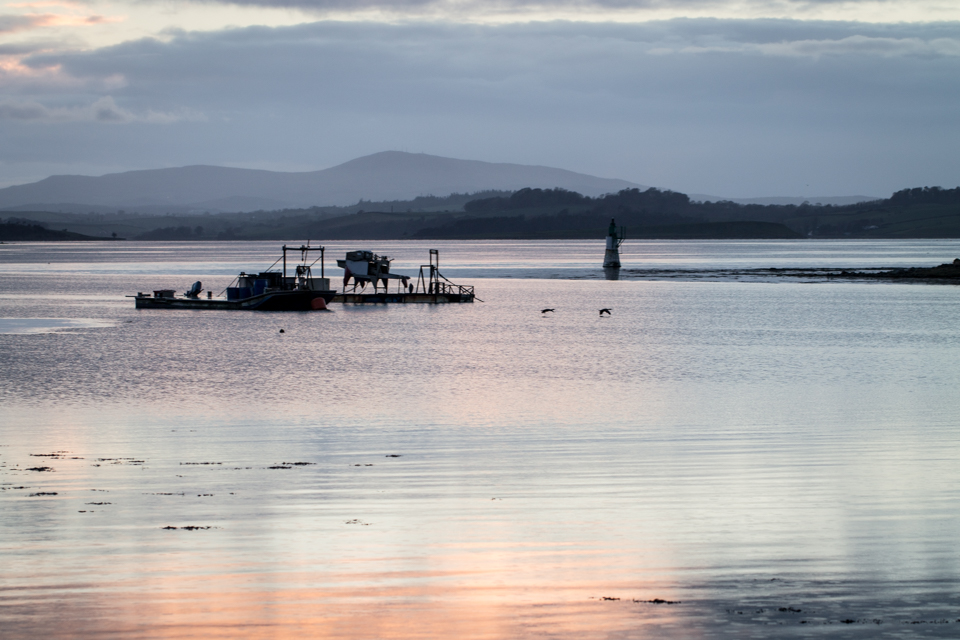
Twenty minutes. Last night at Ballyhenry Bay, Strangford Lough.


It was totally heart-warming to see such glorious spring light, after a few hours of dodging rainstorms round the tip of the peninsula.

It only occurred to me as I started editing the shots that it would be interesting to show how the light on this particular view changed during the twenty minutes that I spent beside Ballyhenry Island. I wish I'd thought of it at the time and framed each shot exactly the same.

I'm shooting straight into the setting sun, so there are lots of burnt-out patches and flashes of lens flare, but the series makes me happy.

So does this fellow....


...who was perched on the edge of the deck until the final two shots.

Sunday, 26 February 2017

Matthew Loney's Miracle


This month I've worked hard to finish off an audio-visual project that's been part of my life for the last year. At the festival where it was aired for the first time it won two prizes, and I do like to win prizes, but what actually meant more to me was the number of people who commented on the emotions it inspired. [If you'd like to watch it, click here to see it on Vimeo.]


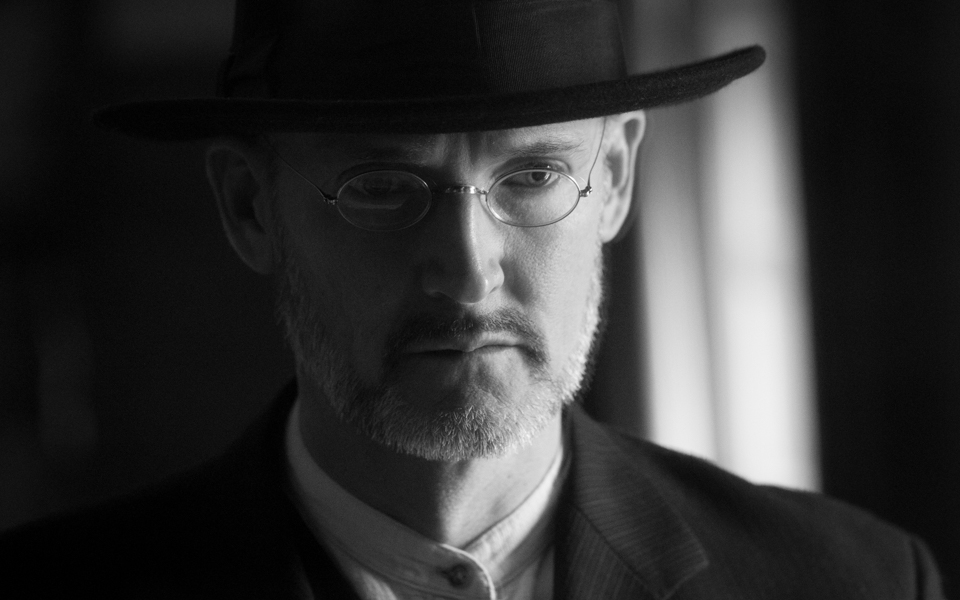
The idea sprang from a photoshoot that J and I did on the beach at New Smyrna, Florida. I had invented a character called Matthew Loney who had left his home in Kilcloud, County Down, in tragic circumstances and sailed to a new life in America. Matthew, in his Irish linen shirt, black hat and dark trousers is seen walking on a pale, sandy beach with a book in his hand.


There was an appealingly atmospheric quality to the photographs from this shoot, and they made me think that perhaps there was a bigger story here that could be developed.


On his next visit here, the ever-co-operative J gamely dressed in Matthew Loney's full Irish suit for some shots at the Ulster Folk Museum, one of the few places in which walking round in a turn-of-the-century hat and waistcoat looks perfectly normal. And in the same week a quick change in the car by Minerstown Beach led to some nice images with the Mournes in the background. 


With an overall structure in place - a bereavement leading to emigration from Ireland to America - I began to invent details. I added the idea of the ring, first seen on Sophia's finger during the happy start of the story, later thrown down in despair by Matthew on the County Down beach, and finally found again, magically, in Florida. I used a cast silver heart ring that I'd made myself - it's not at all historically accurate, but I liked the fact that it was handmade and my own.


I decided that Sophia would play the harp, drawing attention to her fingers, and hence the ring, and allowing me to use a harp as a key part of the score. 


Daffodils appeared in the teaching charts behind Matthew in his school, giving me the idea that he would pick one as he walked happily home from work, and that this would later be shown, withered and decayed, as Sophia died. 


Sophia's face is never seen, except in the photograph Matthew packs. Her hand is, and it's my own hand here, shot sometimes with a remote and sometimes by a trusty assistant - many thanks to J and to Hope for helping with this.


I used the AV software PicturestoExe to organise my photographs into groups, like scenes in a play: Matthew teaching in his school, Matthew walking home, domestic details and so on.


It took several weeks to compose and record the music. I began by creating little melodic motifs for both Matthew and Sophia. These are settings of their names (D E G F# for Matthew and B A D for Sophia), designed so that the motifs would fit together in harmony when needed - you can hear them together in the "love" scene and in the final beach scene. 

Then I created short complete pieces for both Matthew and Sophia. Matthew's is played at the very start. Sophia's is heard when we first see their house.


For the sadder scenes, I developed the motifs and melodies to incorporate different modes, more dissonant harmonies and altered rhythms, as well as moving into different keys to create a satisfying overall structure.


It took many hours then to sequence the photographs, edit the music to fit, and create transitions appropriate to each scene.

I'm pleased with the final product - but of course I can already see things that I'd like to change.... In some ways I hate messing round again with work that I've thought of as finished, but I think some further editing may help. For instance, it wasn't clear to all the viewers that Sophia had actually died, and since that's a vital part of the narrative, I'll revisit this scene and try to make it more unambiguous.


But then I need to start work on a new project. Some ideas, black and white and a little shadowy, are already spinning round in my mind.

Sunday, 5 February 2017

The other side


Yesterday was fantastically beautiful. The sun was low and bright, the clouds started off pretty and ended up dramatic, and birds tumbled across every sky if you waited long enough.  


It's not officially spring yet, but it was the first weekend after Imbolc, or Candlemas, or St Brigid's day, and there was a strong sense of the earth stirring and waking, unfolding ready for the new season.


I drove down the other side of the lough (not the Ards peninsula side, which always seems the correct side.... ;)) and explored some roads I'd never seen before. (Though when I told my parents this, they sighed and said I'd been down them plenty of times as a child, but was always reading a novel in the back of the car and paying no attention to the beautiful scenery  all around.) 


Coming back out of Whiterock after visiting the Petrel, I took the Ballymorran Road to the left and wound my way slowly all the way to Killyleagh, taking what seemed like the most attractive direction at every junction. In Northern Ireland it's often hard to park and take photographs of the views which so often leap out at you. It was a little easier on these tinier roads, where the traffic was light and there were occasional verges on which I could stop.


And the views were stunning. The lovely County Down drumlins were lit to their best advantage, their curves marked by skeletal trees and hedges.


The colours were gorgeous, but as I worked on the photographs today I found myself drawn more to the black and white edits, which show off more clearly the striking geometry of the landscape and the joyful light of the day. I hope you enjoy them too.